


























This story is part of Situation Critical, a series from CBC British Columbia reporting on the barriers people in this province face in accessing timely and appropriate health care.

Kristal Garbers of New Westminster, B.C. says she’s worried about where her 78-year-old father will live once he’s discharged from hospital.
Her dad, Siegfried, has been in the Royal Columbian Hospital in New Westminster for the past month and half after being diagnosed with normal pressure hydrocephalus (NPH) — the abnormal buildup of fluids in the brain, causing memory loss, mobility and bladder issues.
“It got to a point where his mobility was starting to get so bad that he wasn’t able to walk,” Garbers told CBC News, “and it progressively got worse over a three-week timeline, so I knew I needed to get him in.”
And while her father has a family physician near his home on the Sunshine Coast, Garbers says it is unsafe for him to live alone.
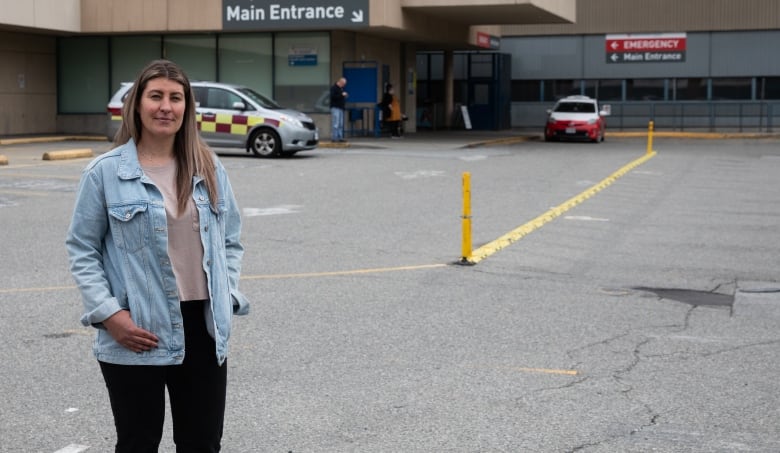
She wants her father to live with her in New Westminster, but that means he will lose his family doctor and be without primary care, as he’s unable to find another one in the Lower Mainland.
“I do have a family doctor … but he’s not taking any more patients at the current time,” Garbers said. “I’m lost for ideas and answers and it’s a struggle.”
She adds that her dad also requires daily physiotherapy, but can’t get the service he needs at the hospital as staffing has been a challenge.
“I’ve tried to hire outside physio to come in and help with him and even that’s proving to be a problem,” Garbers said.
Joelle Bradley, a hospital physician in Metro Vancouver, says she has watched the health-care system in B.C. decline over the last 16 years as many hospital patients are discharged without a family doctor to look after them. Almost one million British Columbians are without a family doctor.
“It is extremely scary for me when I discharge patients who don’t have a primary care physician who knows them,” Bradley told CBC News.
“When this patient goes home … they are going to need adjustments with medications, lab tests need to be monitored and specialist care may need to be co-ordinated.
“I do worry that it may be too late to save primary care … but if you don’t have a family physician, you don’t have health care and our health-care system will collapse,” she added.

Bradley says a friend, who practices family medicine in the Lower Mainland, has been unable to recruit new doctors for their practice for years.
“So as the lease comes due, it’s going to be impossible for the remaining family physicians to take on that financial burden, and the only choice may be to shut the clinic down.”
She says she wrote to four MLAs earlier this month, urging them to address the shortage of family doctors in the province.
She also says more support needs to be given to family doctors as many are struggling to adequately pay their rent, insurance and staff.
In an email to CBC, MLA for Burnaby North Janet Routledge acknowledged the province’s health-care system has been “challenged beyond anything we’ve experienced in recent memory” and that the government is “moving quickly to make systemic improvements that will provide relief immediately and in the long-term.”
Fraser Health said in a statement to CBC that it has recruited six new physiotherapists since May and has come up with new strategies to keep up with the growing demand.
“We have implemented alternative staffing models … [like] having registered nurses and licensed practical nurses support patients’ mobility care needs,” it said.
They also said the ministry of advanced education has provided funding to expand the University of British Columbia’s physical therapy program by adding 20 new seats.











Leave a comment