



Saudi Arabia and three other Arab states have extended the deadline for Qatar to accept a list of demands or face further sanctions by 48 hours.
The initial deadline for Qatar to agree to the group’s 13 demands, including the shutting down of the Al Jazeera news network, expired on Sunday.
The Gulf state, which denies funding extremism, is expected to submit a formal response on Monday.
It has called the demands an “affront to international law”.
The state’s foreign minister will travel to Kuwait on Monday morning to deliver the formal response in a letter, sent from the emir of Qatar to the emir of Kuwait, who is the main mediator in the Gulf crisis.
But in a statement released hours beforehand, lawyers for Qatar denounced the tactics and called for international condemnation.
They said the demands were “reminiscent of the extreme and punitive conduct of ‘bully’ states that have historically resulted in war”.
“The world must unite immediately to halt the singling out of Qatar for unjustified collective punishment and humiliation and to preserve peace, security and prosperity in the region.”
On Saturday, Qatari Foreign Minister Sheikh Mohammed bin Abdulrahman bin Jassim Al-Thani said the state had rejected the demands, but was ready to engage in dialogue under the right conditions.
Qatar has been under unprecedented diplomatic and economic sanctions for weeks from Saudi Arabia and its allies, Egypt, the United Arab Emirates (UAE) and Bahrain.
On 23 June, the four countries, whose foreign ministers will meet on Wednesday to discuss the situation, set a deadline of 10 days for Qatar to agree to their requirements, which include the closure of a Turkish military base and the curbing of diplomatic relations with Iran.
The imposed restrictions have caused turmoil in Qatar, an oil- and gas-rich nation dependent on imports to meet the basic needs of its population of 2.7 million. As a result, Iran and Turkey have been increasingly supplying it with food and other goods.
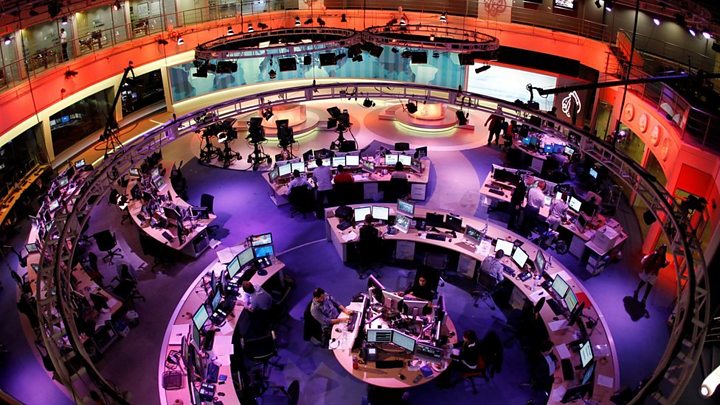
Saudi Arabia, Egypt, the UAE and Bahrain have accused Qatar of harbouring their opponents – including political Islamists such as the Muslim Brotherhood, which is viewed as a particular threat by the absolute monarchies – and giving them a platform on the Al Jazeera satellite channel, which is funded by the Qatari state.

Media playback is unsupported on your device
The four countries severed diplomatic and travel ties with Qatar one month ago, accusing it of supporting terrorism and being an ally of regional foe Iran, charges that Doha denies.
They have since threatened further sanctions.
The situation is the worst political crisis among Gulf countries in decades.
What are the other demands?
According to the Associated Press news agency, which obtained a copy of the list, Qatar must also:
- Sever all ties with the Muslim Brotherhood, which has been banned in a handful of Arab states
- Refuse to naturalise citizens from the four countries and expel those currently on its territory, in what the countries describe as an effort to keep Qatar from meddling in their internal affairs
- Hand over all individuals who are wanted by the four countries for terrorism
- Stop funding any extremist entities that are designated as terrorist groups by the US
- Provide detailed information about opposition figures whom Qatar has funded, ostensibly in Saudi Arabia and the other nations
- Align itself politically, economically and otherwise with the Gulf Co-operation Council (GCC)
- Stop funding other news outlets in addition to Al Jazeera, including Arabi21 and Middle East Eye
- Pay an unspecified sum in compensation
An unnamed official from one of the four countries told Reuters news agency that Qatar was also being asked to sever links with so-called Islamic State, al-Qaeda and Lebanese Shia militant group Hezbollah.
The demands have not been officially unveiled. Their publication has increased the friction between the two sides.